Learn More About Self-Worth Education On Our Upcoming Webinar:
March 25, 2026 12:00PM EST
00
DAYS
00
HOURS
00
MINS
00
SECS
The Self-Worth Cultivation Pilot Program
A structured, strengths-based psychoeducational program for identity development in adolescent behavioral health settings.
The Self-Worth Cultivation™ Pilot Program is a four-week, non-clinical curriculum designed to operationalize self-worth, identity, and internal belief development within residential, behavioral health, and youth-serving environments.
It is built to complement existing treatment models by strengthening engagement, internalization of skills, and perceived capability in adolescents.
Designed to support:
- Increased youth engagement and participation in structured programming
- Consistent, staff-delivered psychoeducational groups across shifts
- Reduced variability in group facilitation and daily programming flow
- Strengthened identity development as a foundation for treatment engagement
Yes! We want an easy system




Common Challenges Across Youth Care Settings:
Even in well-structured programs, organizations often observe:
- Inconsistent engagement during group time
- Variability in staff-led programming across shifts
- Limited access to structured, ready-to-use group materials
- Youth demonstrating skills in session but struggling to internalize them
These challenges are common across youth care environments, even those using evidence-aligned practices.
These challenges are not typically due to a lack of effort or clinical quality.
They often reflect an underlying gap:
Identity and internal belief systems are rarely addressed in structured, measurable ways.
When youth do not perceive themselves as capable, worthy, or able to change, engagement remains conditional, and progress may not sustain.
Addressing the Gap
The Self-Worth Cultivation™ Pilot Program was developed to address identity and self-worth as structured, teachable domains.
Through guided psychoeducation, youth are taught how belief systems, identity, and internal narratives influence behavior, regulation, and engagement.
This allows existing interventions to be more effectively internalized and applied.

Program Overview
A structured, four-week implementation model designed for:
•Residential treatment programs
• Behavioral health units
• Juvenile justice and group home settings
The program is designed for integration into existing schedules without requiring additional clinical staffing or restructuring of current systems.
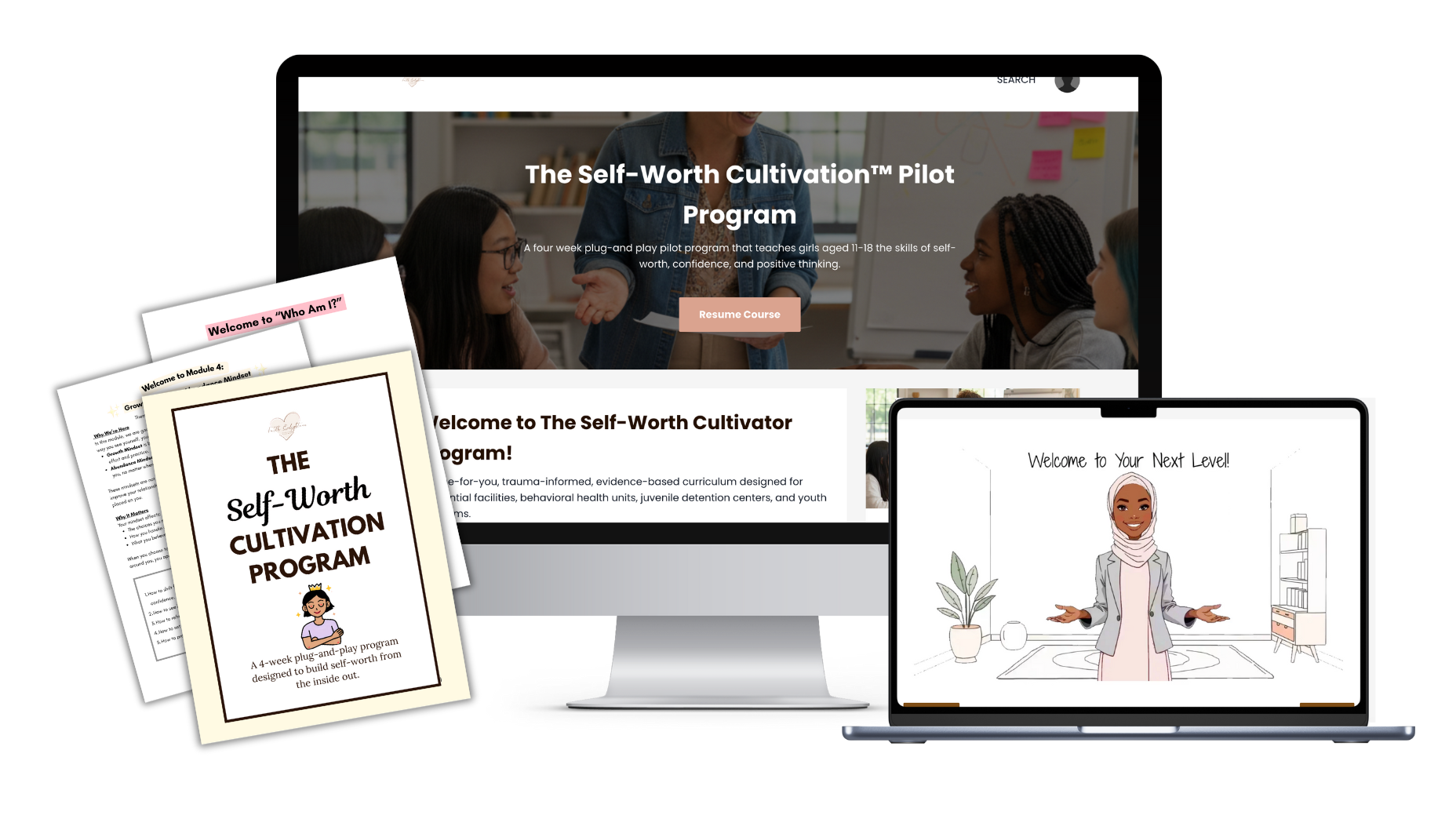

Structured Delivery Model
A comprehensive facilitator guide provides:
• Defined session objectives
• Step-by-step delivery structure
• Standardized language and prompts
This supports consistent implementation across staff and shifts.

Developmentally Aligned Instruction
Lessons are designed to support:
• Adolescent attention and comprehension
• Safe discussion of identity and beliefs
• Gradual development of self-awareness and internal regulation

Direct Self-Worth Education
Youth receive explicit instruction on:
• Identity development
• Internal belief systems
• Self-perception and capability
Grounded in strengths-based and Positive Youth Development frameworks.
.
Program Access
All sales for The Self-Worth Cultivation™ Pilot Program are final.
Because this is a digital curriculum with immediate access to videos, worksheets, facilitator materials, and downloadable resources, we do not offer refunds, credits, or cancellations once purchased.
We encourage all programs to review the waitlist materials, implementation details before enrolling to ensure the pilot is the right fit for your team and population.
Our team is committed to supporting you through onboarding, set-up, and facilitation. If you have questions or need assistance after purchase, please reach out to faith@faithenlightens.com
and we will be happy to help.


Program Structure
The curriculum is organized into four developmental phases:
☑️ Module 1: Foundations of Self-Worth
Introduction to identity, belief systems, and self-perception
☑️ Module 2: Identity and Self-Awareness:
Development of personal identity, values, and strengths
☑️ Module 3: Internal Dialogue and Beliefs:
Understanding and restructuring negative self-talk
☑️ Module 4: Mindset and Capability:
Building perceived capability, motivation, and future orientation.

Is The Self-Worth Cultivation right for your program?
Appropriate For Organizations That:
- Serve adolescents in structured care environments
- Seek consistent, staff-delivered psychoeducational programming
- Aim to strengthen identity and engagement alongside treatment
- Value structured, strengths-based approaches
Not Intended For:
- Organizations seeking a clinical treatment model
- Programs without structured group delivery
- Settings not aligned with strengths-based or trauma-informed approaches
About the Academy:
Faith Enlightens Self-Love Academy develops structured self-worth education designed to complement existing behavioral health and youth-serving systems.
The Self-Worth Cultivation™ Pilot Program was developed based on direct experience in adolescent residential care, where consistent patterns related to identity and internal belief systems were observed across diverse populations.
The program translates these observations into a structured, implementable model for real-world settings.

Frequently Asked Questions
Will my staff be able to implement this program effectively?
How does this differ from existing group programming or SEL curricula?
Is this a clinical or therapeutic program?
How is this program integrated into existing schedules?
Are refunds or cancellations available?
What outcomes can we expect to see?
How quickly can we begin implementation?
How are outcomes measured?
Is this program only for adolescent girls?
What level of support is provided after purchase?
What if our staff turnover is high?
Is this program evidence-based?
What happens after the 4-week program is complete?
The Self-Worth Cultivation Program is an educational, skills-based, mindfulness-CBT informed curriculum designed to support emotional learning, self-worth development, and personal growth. It is not clinical treatment, psychotherapy, or a substitute for licensed therapeutic services.